Creating a Cozy Meditation Space

When we think of the “perfect” meditation space, the image most of us likely have in our heads is a serene room — probably in shades of white — with a sparse collection of neutral meditation cushions, a yoga blanket or mat scattered about the room and a Buddha statue, herb stick, vase with a flower or clipping from nature and non-toxic candles flickering on a minimalistic altar with fair-trade incense wafting through the space. Which is fabulous if you can swing it and it’s your heart’s desire to have such a space, but my philosophy is that our daily practices, such as breathwork, meditation and yoga asana, should be simple and portable. This way, no matter where you are, it’s easy to keep up with your routine, or at the very least a simplified version.

In my home, I’m fortunate to have a dedicated space on our sun porch where my altar, yoga mats and other supplies live but, truth be told, the couch is the place I most frequently practice. In part because most of the year the porch is either too hot or too cold, despite the room being enclosed and having relatively new windows.

While generally, I practice using only my breath and my body, within arm’s reach to my favorite spot on the couch are items that, if needed or desired, keep my practice gentle, comfortable and cozy. A “nest” if you will. On the coffee table, there’s a lightly scented soy candle, a glass of water and hot tea, as well as my journal and a pen. In a cigar box tucked under the sofa I keep moisturizer (in case my hands feel dry), lip balm (I get distracted during meditation if my lips are dry), lavender essential oil and a pair of earbuds (for when I use guided meditations or want to listen to a sound bath). Finally, a throw blanket, toss pillows and a heating pad (hidden nearby) are handy if I need a little lumbar or head support or am feeling chilly.

The overarching theme for me is comfort. The more comfortable I am, the more likely I will have positive feelings toward my practice, which increases the chances that I’ll be more consistent.

When I go out of town for a day or more, I take my travel yoga mat and, perhaps, a travel-sized candle, a small vial of essential oil and a mini-Buddha to set up an impromptu meditation altar. But a towel or three on the floor of a hotel room works just as well as the travel mat. Or a gentle seated or prone yoga practice and meditation in bed during travel might be the most supportive offering I can give myself — no mat required.

Recently, I wrote an article for Gambit with tips for setting up a meditation space in your home. Designer Whitney Jones of Whitney J Decor Interior Design Studio offered practical advice for creating one whether you have an entire room, a corner or need to keep it portable with a mobile “meditation station.” One of my favorite tips from Whitney is to have a mirror in your meditation space. I’ll let you read the piece to find out the reason!

Every practice looks different from person to person, season to season (both literal seasons and those of life) and day-to-day or even moment-to-moment. So, while tips and advice can be helpful, inspirational and even aspirational, rather than blindly follow someone else’s practice setup, resolve to experiment and tap into your personal needs each day as a mindfulness technique in the ongoing process of learning about yourself and building a sustainable practice.
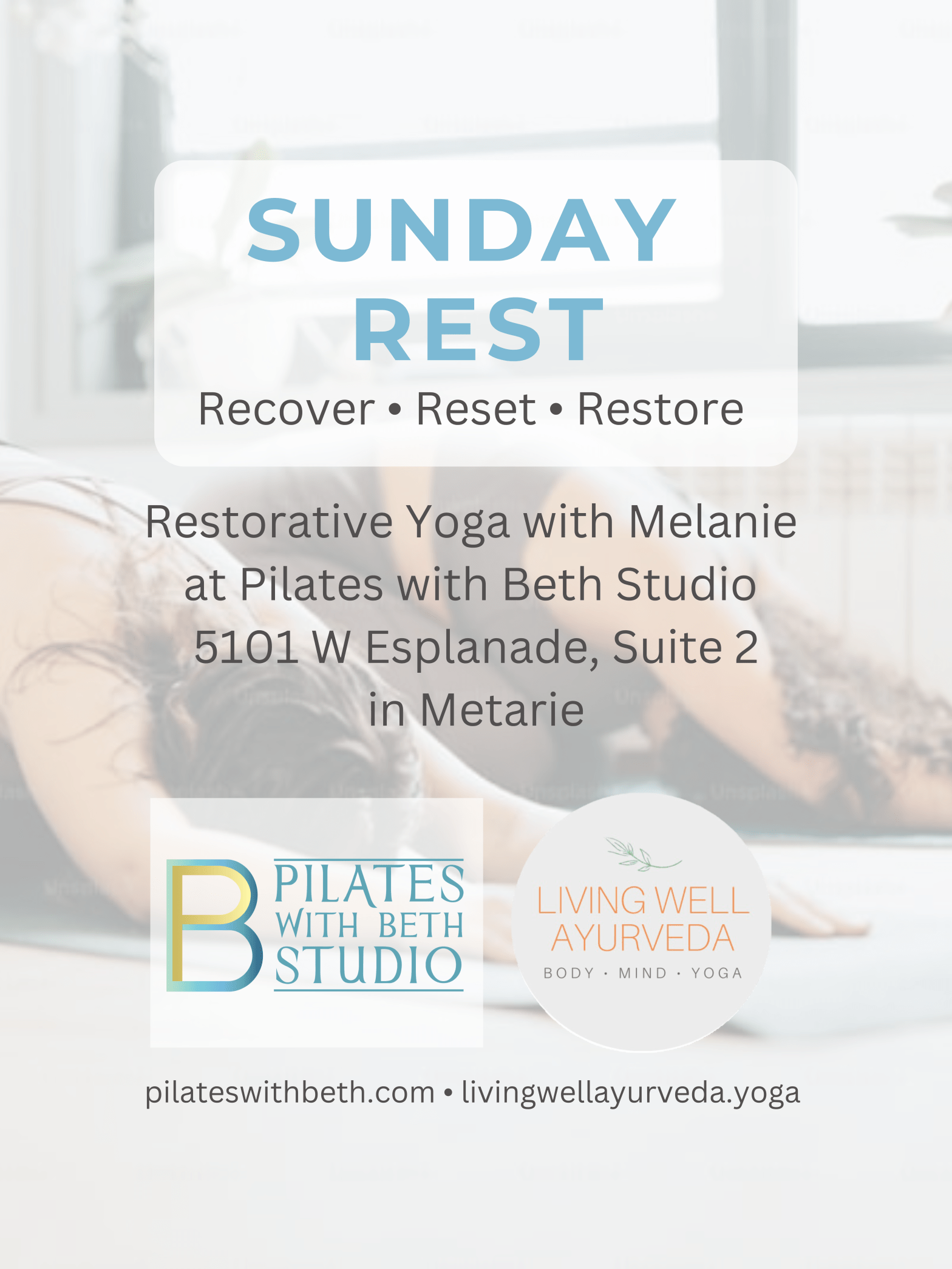
Sunday Rest Yoga Class

Do you need to slow down, rest and digest? That’s a trick question: We all do! Which is why I created a yoga class for that exact purpose.

Please join me on Sundays at Pilates with Beth studio in Metairie for Sunday Rest, a 75-minute restorative yoga class designed to help you recover, reset and restore for the week ahead. Slow it down with pranayama (breathwork), Dharana (meditation), and restorative yoga asana (physical practice) and take this opportunity to reconnect with your inner self, leaving refreshed and renewed. The class is open to all levels of yoga experience, from beginner to advanced, with modifications provided throughout the class. Students should bring a mat and a blanket or towel (the latter will be used as a support prop).

The first class is on Feb. 23 at 10 a.m. Class sizes are small and spots are limited, so click the link in bio to claim your spot! Also, if you love or want to try pilates, schedule a class with Beth while you’re booking

Visit pilateswithbeth.com to schedule a class. Email me at livingwellayurvedayoga@gmal.com if you have questions. Pilates with Beth is located at 5101 W Esplanade Ave., Suite 2, Metairie, Louisiana, 70006

Steamed Bananas

For those who aren’t into a big breakfast, steamed bananas are an easy, delicious and supportive choice. This light, but satisfying option will stoke agni (digestive fire), which makes digestion stronger throughout the day. Steaming counters the banana’s astringency and breaks them down a little, making them easier to digest. The inclusion of Ayurvedic spices and ghee adds flavor, increasing satisfaction, and additional support for the doshas (constitutions).

Ingredients

1 medium or large ripe banana, cut in two-inch pieces

¼ cup or less water (just enough to cover the bottom of the pan)

1 teaspoon ghee (or coconut oil)

¼ teaspoon ground cinnamon 

¼ ground ginger (dried)

¼ teaspoon ground cardamom 

sprinkle mineral salt

Instructions

Add ¼ water and ghee to a sauce pan or skillet and turn on medium heat. As it’s heating, place cut banana chunks in pan and sprinkle with spices. Cover with lid and steam for about 1 or 2 minutes. Enjoy!


Making Homemade Yogurt

Fresh, delicious, easy and great for gut heath

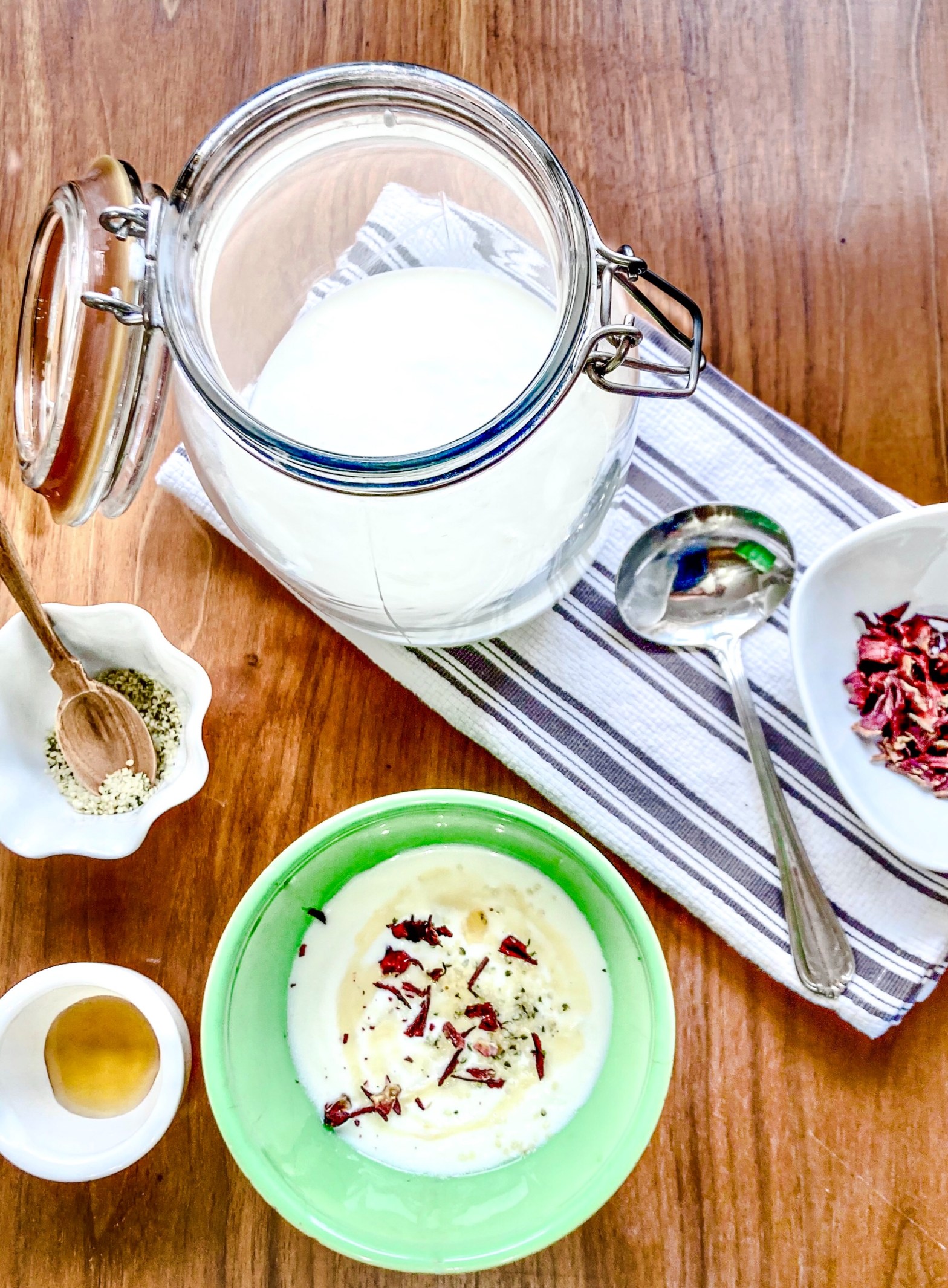
At first, the notion of making homemade yogurt sounds daunting. Especially if you are new to the world of fermentation. Even more so if you are new to the world of home fermentation. But, it’s surprisingly easy and well worth it in taste and health benefits.

Yogurt contains live and active cultures, aka the “good” bacteria (or probiotics) that support gut health, or good digestion, so the fresher the better. This recipe offers the most low-tech way to make it. (If you want to make it with a Crockpot, Instapot or yogurt maker, this is not the blog post for you, and you’ll want to get to googling.)

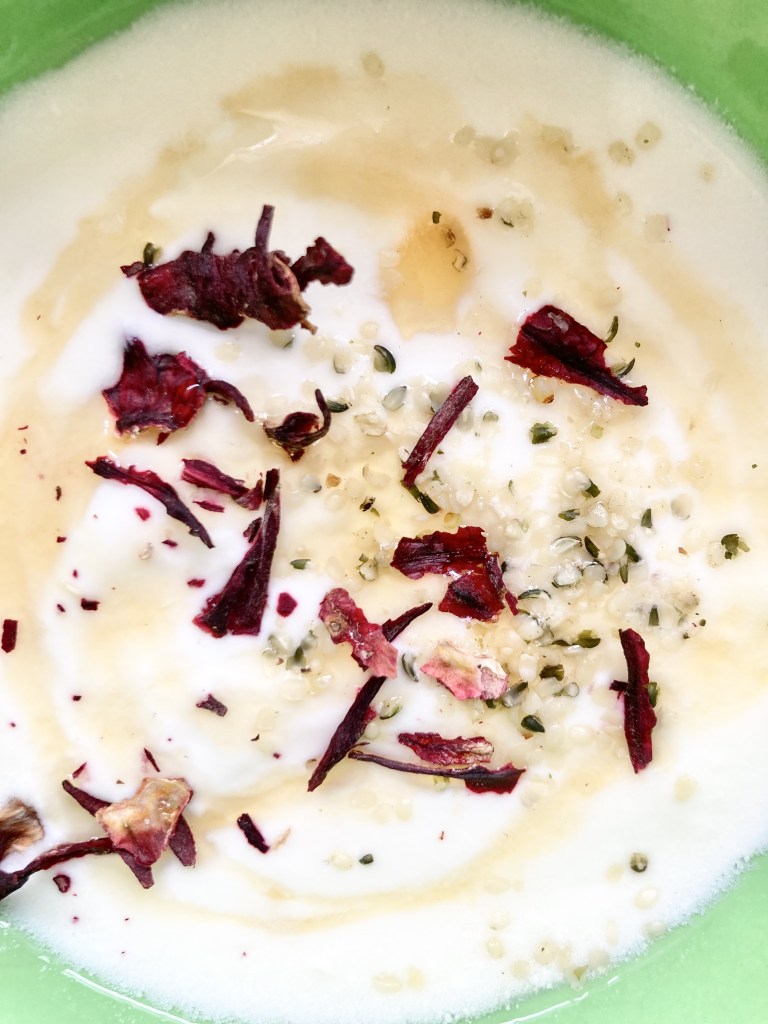
In Ayurveda, it’s best to avoid eating fruit with yogurt (and other dairy), because it digests slowly which can cause bloating and other gastrointestinal discomfort or issues. Opt for the nuts and seeds, sweeteners best for your dosha (or current imbalance). I love topping mine with dried rose petals or hibiscus leaves. Be sure to get culinary grade versions of your favorite dried, edible flowers.

Supplies

  • Sterilized one-quart jar or glass or ceramic bowl with a lid.
  • Food thermometer, if you have one.
  • Some towels, maybe.

Ingredients

  • 1 quart milk, whole organic
  • 2 tablespoons plain yogurt (my favorite is Fage Greek-style, but you do you)

Directions

  • Pour milk in pot and heat just to boiling (about 180 F) to kill competing bacteria and encourage coagulation (thickening).
  • Transfer milk to sterilized container and cool to room temperature (about 100 F). If you aren’t using a thermometer, it should feel warm to the touch, not hot.
  • Once it’s cool enough, stir in plain yogurt.
  • Cover container with lid and place it in warm, draft-free area, such as a pantry cabinet or an oven that is turned off with only the light turned on (which will emit enough heat to keep it warm and activate the yogurt). You can also wrap container in towels and place in warm, draft-free area, such as a pantry cabinet. Another method is to place on top of a toaster oven and turn it on for about six hours, but this can use a lot of electricity.
  • Let the yogurt sit overnight or for about six-to-12 hours, depending on your desired thickness. For thicker, Greek-style yogurt, strain the whey out of the yogurt (overnight in the refrigerator) using cheesecloth.
  • With homemade ferments, your nose is your friend. Give it the sniff test and if it smells like yogurt (and not “off” in any way), you’re good to go. Refrigerate, eat and enjoy.

(Note: Homemade fermented foods may not be safe for those who are pregnant or immunocompromised.)

An earlier version of this article originally published on July 14, 2023 on myneworleans.com.

Ayurvedic Self-Massage

Abhyanga is a deeply nourishing self-care practice that calms, nourishes and balances

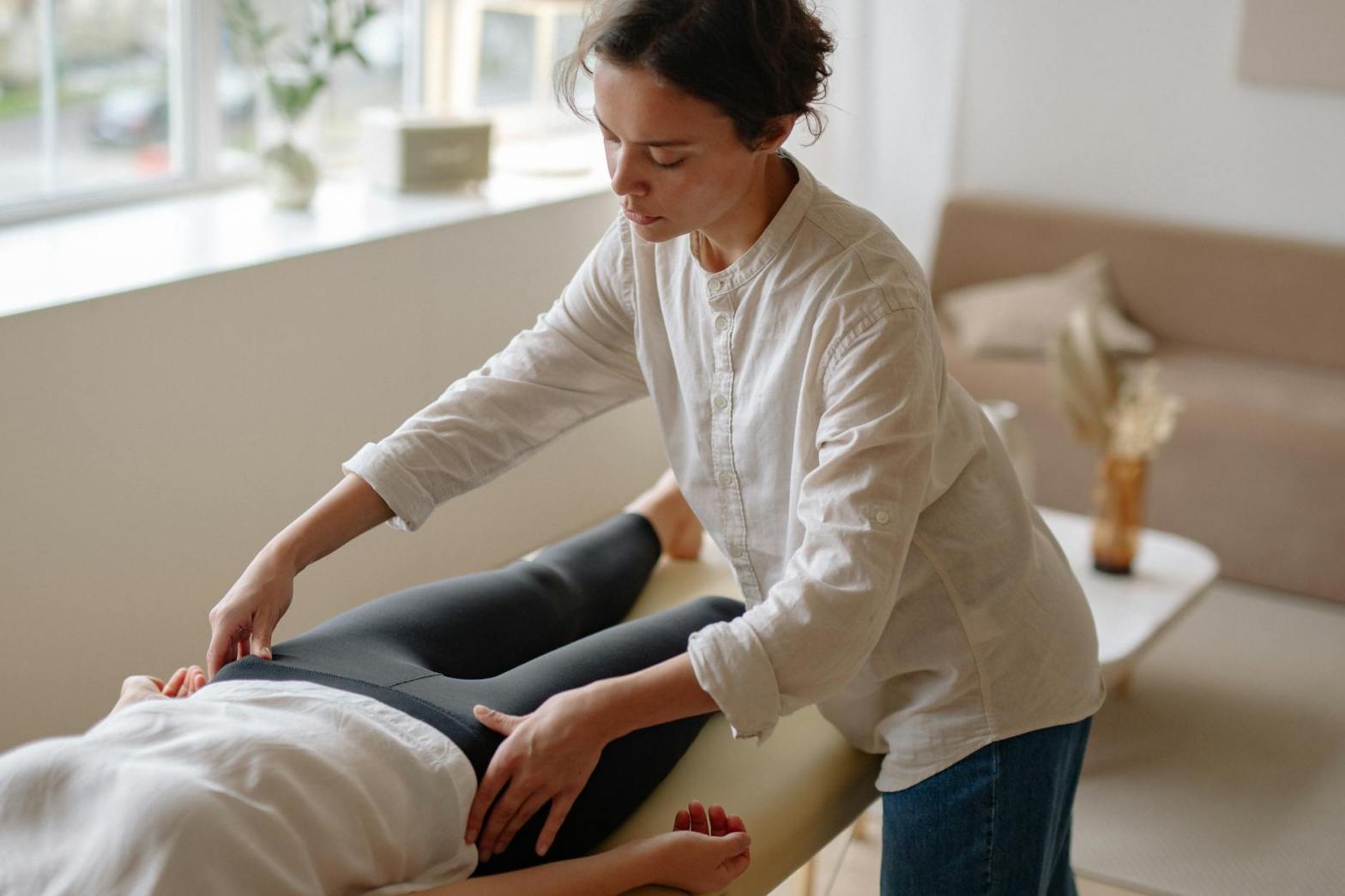
Abhyanga (pronounced ah-bhee-yahn-gah or click here to hear it) is a traditional Ayurvedic massage therapy in which warm herbal oils are lovingly applied to the body. The word “abhyanga” comes from the Sanskrit language, and means “self-massage with oil.” Abhyanga is an essential practice for all doshas and has myriad benefits.

Benefits

  1. Improves circulation: The gentle massage strokes help to stimulate the flow of blood and lymphatic fluids throughout the body, which helps to nourish the cells and remove toxins.
  2. Promotes relaxation: The warmth of the oil and the gentle massage strokes help to calm the nervous system, reducing stress and promoting relaxation.
  3. Nourish skin: The warm herbal oils are rich in nutrients that nourish the skin, leaving it feeling soft, supple and hydrated.
  4. Strengthen the immune system: Abhyanga helps boost the immune system by removing toxins and stimulating the flow of lymphatic fluids.
  5. Balance the doshas: The specific oils used in the massage are selected based on an individual’s dosha type, helping to balance the doshas.

Oils to choose based on your dosha

  • Vata: The best oils for balancing vata dosha are sesame and almond oil, which are warm, heavy, dense, soft and smooth.
  • Pitta: For balancing pitta dosha coconut oil (favor liquid coconut oil) and sunflower oil are cooling and smoothing.
  • Kapha: Safflower and grapeseed oil are good choices for kapha dosha due to their light quaility and easy absorbtion. Mustard seed oil can also be a good choice.

Note, there are some tridoshic (meaning good for all doshas) oils as well. Here are two that I like:

How to do Abhyanga

  1. The massage is performed using warm, herb-infused oils selected based on an individual’s dosha. You can warm the oils in a tea light oil warmer or diffuser or place hot or warm water in a crock or similar receptacle and place the bottle of oil inside to warm.
  2. Start from the head and work your way down toward the feet.
  3. Apply in a rhythmic, flowing motion, with long strokes on the limbs and circular motions on the joints. If you are a visual learner, I love this Abhyanga video tutorial by Ayurvedic Practitioner Julie Bernier.
  4. Once all oil is applied, leave it on for some time to allow it to penetrate the skin and nourish the deeper tissues.
  5. Some people like to turn on the shower and a space heater to create a steam bath or sauna effect.
  6. After allowing the oil to soak in, take a warm bath. The warm water will help the oil penetrate deeper and will rinse away the majority of it.
  7. When used this way the oil is cleansing, so you only need to wash your hair and use soap in areas that get sweaty.
  8. Pro-tip: You may want to set aside a designated towel for Abhyanga, as the oils can sometimes penetrate into the fibers and make the towel a little mucky.

When to do Abahyanga

Any way you slice it, Abhyanga is a deeply relaxing and rejuvenating therapy. I recommend incorporating it into your weekly routine. Once a week is a wonder and great regular self-care. If you can do it more often, go for it. Return to it more often or for extra support when life gets hectic, you are having trouble sleeping or you are feeling tired, anxious or stressed.

Ashwagandha 101

A primer on the stress-relieving wonder root

You’ve probably read about ashwagandha or heard more than one friend swear by it for its calming effect. In fact, a small 2012 study by the National Center for Biotechnology Information found, “…high-concentration full-spectrum ashwagandha root extract improves an individual’s resistance towards stress and thereby improves self-assessed quality of life.”

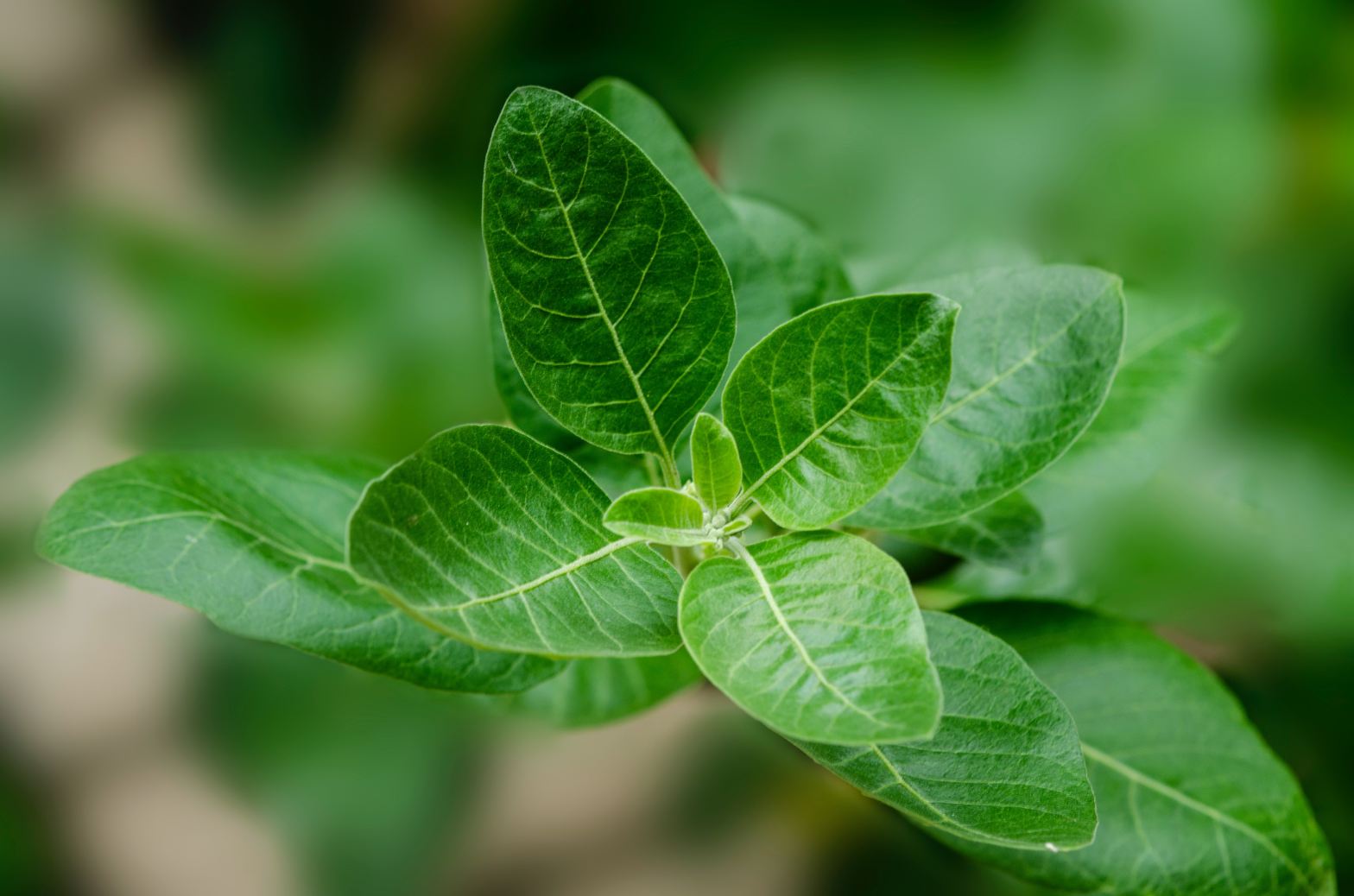
We asked for an ashwagandha overview from Dr. Scott Roos, an Ayurveda practitioner. Ayurveda was developed in ancient India and is the world’s oldest medical system. It’s the primary healthcare system in India and employs a natural and holistic approach to health, using plants, minerals, diet, exercise and lifestyle to maintain or regain health, wellness and vitality. Roos says ashwagandha is a shrub found in Asia and Africa. It is one of the treatments for people with Vāta Dosha out of balance. Doshas are the three categories, or constitutions, affecting the body, mind and behavior. Vāta dosha controls movement and processes, including blood flow, bowel movements, breathing and thoughts.

Roos says ashwagandha can help people with various issues including acne, allergies, anxiety, back pain, fatigue, insomnia, low sex drive and muscle stiffness. Pregnant women should avoid ashwagandha, as well as women in perimenopause or menopause experiencing hot flashes, “unless it is combined in a formula with sufficient cooling herbs,” says Roos, because the flashes indicate a (treatable) doshic imbalance.

“A good introduction to the herb would be to take 500 milligrams three times a day after meals with warm water for 100 days,” says Roos, who recommends it in powder form.

“Ashwagandha is an amazing herb when used properly,” says Roos. “Because Vāta Dosha tends to be the main culprit for folks over 55, Ashwagandha can be a great supplement to our diets as we enter the latter part of our lives.”

As with any supplement or change in diet, consult your healthcare practitioner before taking it.

(DISCLOSURE: As an Amazon Associate I earn from qualifying purchases.)

Here are a few of Dr. Roos’ product recommendations:

Organic India Tulsi Ashwagandha Tea is a caffeine-free blend of tulsi leaves and ashwagandha root designed to uplift and relax at the same time. Available at Whole Foods. 

Himalaya Organic Ashwagandha capsules include ashwagandha root and extract. The recommended amount is one caplet per day before food. himalayausa.com.

Banyan Botanicals Ashwagandha Powder. Roos recommends a powder as his top choice of how to take ashwagandha. Banyan’s suggested use is “¼ to ½ teaspoon with warm water, once or twice daily, or as directed by your health practitioner.” banyanbotanicals.com

Here’s one I love:

Banyan Botanicals Ashwagandha Latte (contains roughly 104 mg of Ashwagandha or 10.4 g per package according to Banyan Botanicals) This creamy, caffeine-free, spiced adaptogen latte is delicious any time of day. Cardamom and cinnamon round out the flavors and it is sweetened with maple syrup and haritaki fruit. I love sipping this at night mixed with warm coconut milk. Use whichever milk you prefer or the one that best supports your dosha or current imbalance.

(Note: A version of this article was originally published in St. Charles Avenue magazine and on myneworleans.com.)

Spring Reset

The last couple of years, I’ve been doing a seasonal reset as we transition from winter to spring or summer to fall. As a 200-hour registered yoga teacher and certified Ayurvedic nutrition counselor, the version I employ is, naturally, from the Ayurvedic tradition. Ayurveda is the sister science and lifestyle practice of yoga, both of which originated on the Asian subcontinent 5,000 to 6,000 years ago. Typically, a reset can last anywhere from three to 14 days, with preparation and rejuvenation, or rasayana, days built into the time frame. I did a guided version as part of a year-long Ayurvedic immersion class I started in January, so I thought I’d share a light version if you too feel as though you’d like to hit the reset button this season.

You don’t have to be a yoga practitioner or ayurvedic devotee to pause for a few days, engage in self-care practices, eat nourishing food, enjoy nature, get in some gentle movement and restore yourself to a state of balance, if only for a few days. I say that because as we all know, life isn’t conducive to being 100 percent in balance 100 percent of the time. But, we can certainly right the ship every once in a while. Some of the below may not resonate with you. Feel free to modify it in whatever way feels right for you. Most important: Be kind and gentle with yourself.  

Three-Day Reset

  1. Scheduling: Find a weekend when you can clear your schedule (at least for the most part). If that’s not an option for you, try to set it when you have one or two days off. The goal is to make time for rest and relaxation. Block out your calendar for those days, practice saying no to obligations and let your family know your plans. (Perhaps they will even join you for all, or part of it.) Set a reminder for three days before and two days after the blocked dates.
  2. Set Intentions: Set an intention, or sankalpa, for your reset time. What do you want to experience during your reset? Use positive language to create an affirmation. For example, “I am cultivating energy and vitality.” Repeat it often throughout your reset.
  3. Preparation: Spend a few days tapering off processed foods, meat, sweets, caffeine, alcohol and any other recreational substances, as well as sugar. Eat fresh, whole foods during this time. This stage is about un-proccesing your diet gradually. For example, if you are used to drinking five or six cups of coffee a day, you may want to start earlier than three days in advance so you don’t get headaches and other withdrawal symptoms. Focus on being gentle to yourself and your system. It is also a good time to gather ingredients for the food you’ll be enjoying in the coming days. (Recipes and ingredients linked below. None of these are affiliate links or sponsored shares.)
  4. Mono-Diet: When your preparation days are complete, it’s time to start what’s called a mono-diet. This is not about deprivation. The recipes are nourishing, and you can eat as much as you’d like for the following three days. (Note: Be sure to continue taking your doctor prescribed medications throughout your reset.)
    • BreakfastSimple oatmeal with cinnamon, nutmeg, cardamom, ginger and dried and cooked fruits or a simple bowl of seasonal fruit.
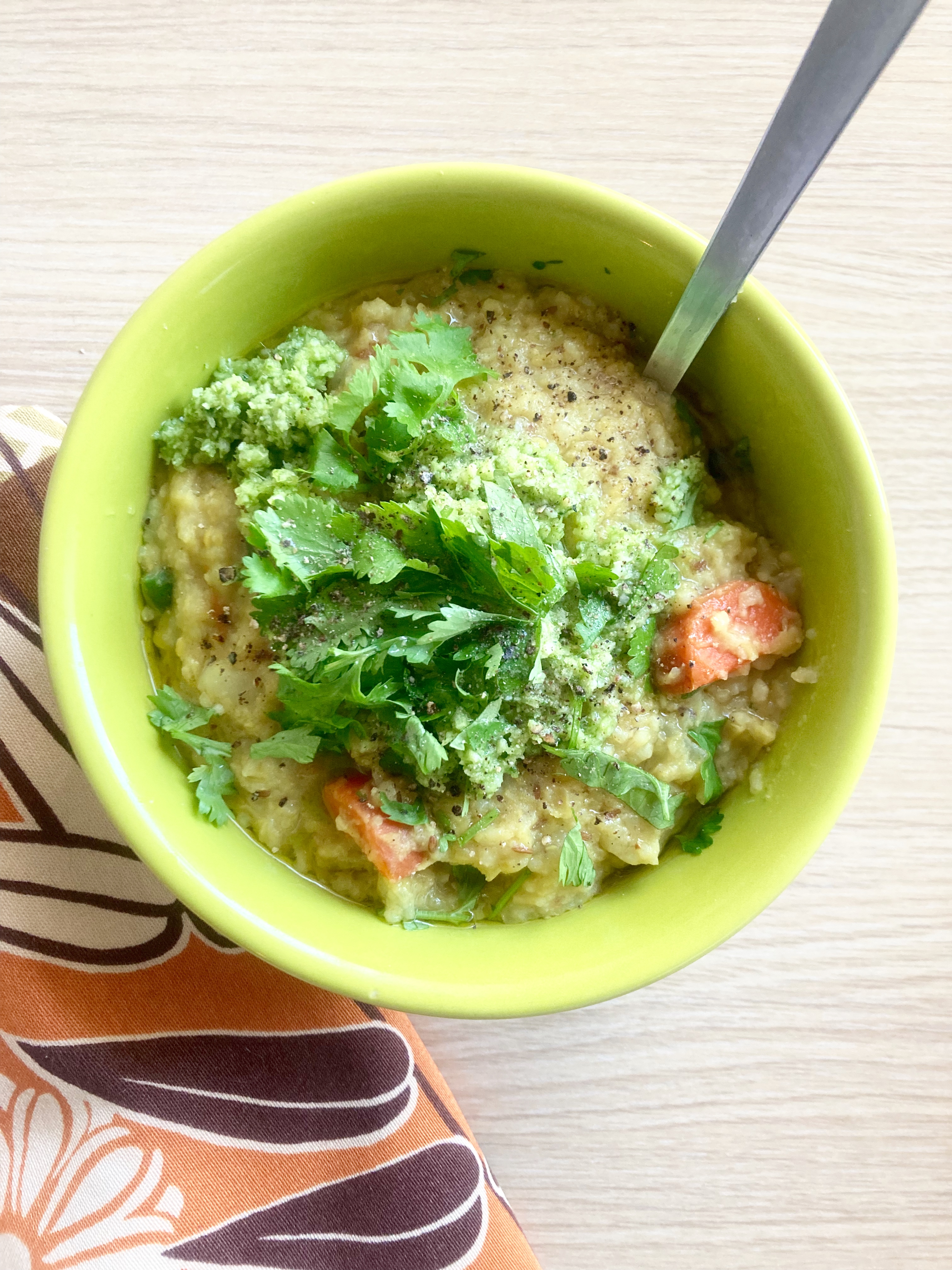
    • Lunch and Dinner: Winter Kitchari with Ginger Chutney recipe by certified yoga instructor and Ayurvedic counselor Claire Ragozzino (and my immersion class teacher). Kitchari is a centuries-old, one-pot mung bean (or lentil) stew (or soup, depending on how you make it). Seasonal veggie and topping variations keep it from being too monotonous.
    • Snacks: It’s best to allow about three hours between meals, but if you are hungry snack on fresh fruit or kitchari. It’s important to feel satisfied and get enough nutritional calories throughout the day.
    • Hydration: Sip warm water and digestive teas between meals.
    • Activities: Overall, take a break from excessive exercise and take it easy. Rest as much as you can and take walks in nature if possible. Don’t overwhelm yourself by trying to do all of the practices below. It’s not about being perfect and ticking things off a list. Pick one or two that stand out to you and leave the rest.
      • Morning: Rise early, Scrape your tongue and brush your teeth. Sip hot water (with or without lemon — this helps get your bowels moving). Take a walk, do gentle yoga, tai chi or another slow, calm movement. Take a bath or shower. Make your teas and prepare your food for the day. Try to eat breakfast between 7 and 8 a.m. A brief meditation session and deep breathing are beneficial morning practices as well and help start the day on a calm note. I like the Calm and Insight Timer apps for guided meditations, breathwork, yoga and more. It’s also helpful to journal during your reset. This can be a simple brain dump of anything that pops into your head, self-talk about the reset process (trials and triumphs), resistance that may be coming up or anything else on your mind.
      • Afternoon: Sip water and teas, rest, read and relax. Eat lunch around noon to 1 p.m. and take about a 10-minute walk afterward, to keep things moving. At some point in the afternoon, perhaps about an hour before dinner, try yoga nidra. (This is a type of meditation that keeps the mind engaged but is very restive and restorative, like a nap. It’s great for people who think they can’t meditate!) This is such a lovely transition from afternoon to evening.
      • Evening: It’s time to wind down for the night. Eat dinner from around 6 to 7 p.m. Enjoy hobbies and quiet activities, do gentle yoga and meditate, try abhyanga, which is an ayurvedic self-massage using oil and take a hot bath with Epsom salt to prepare yourself for a restful night’s sleep. Be sure to stop using electronics one or two hours before bed. Or use your reset days to go on an electronics fast as well. Plan to go to bed no later than 10 p.m.
  5. Reintroduction (Rasayana): Once your three days is over, it’s time to slowly diversify your diet and transition to your normal routine. Gradually switch back to the simple, whole foods you were eating during the preparation phase and pay attention to how your body feels when you eat certain foods.
  6. Processing: This has been a time of rest and, hopefully, reflection. Insights and revelations might pop up for you during and after the reset. Listen, write them down and process them as they come.

If you have a question about Ayurveda or this spring reset, email me at livingwellayurvedayoga@gmail.com.

(Note: An earlier version of this article was originally published on MyNewOrleans.Com.)

What is Ayurveda?

“Ayurveda teaches us to cherish our innate-nature ‘to love and honor who we are,’ not as what people think or tell us, who we should be.”

Ayurvedic Proverb

Ayurveda originated in India thousands of years ago and translates to the “science of life.” It’s comprised of deeply healing and nourishing practices to help us stay attuned to nature and balanced through every season of the year and of life. Many, including me, think of it as the sister science to yoga. When I use the term yoga, I don’t just mean asana, or the physical practice. Rather, I’m talking about all eight limbs of yoga. Which are:

  1. Yama: Character-building or moral disciplines
  2. Niyama: Positive and character-building duties or observances
  3. Asana: Physical practice.
  4. Pranayama: Breathing techniques, breath regulation and breathwork.
  5. Pratyahara: Withdrawl of the senses
  6. Dharana: Meditation in which concentration is focused.
  7. Dhyana: Meditation in which one is absorbed.
  8. Samadhi: Meditation in which there is a sense of oneness or bliss.

At the risk of oversimplifying, yoga is so much more than a workout or the physical expression of a spiritual practice. It is a way of life. If you are already a yoga or meditation practitioner, Ayurveda is a gorgeous complement to practice. But even for those new to one or all, getting started is as simple as deciding to incorporate a nourishing habit or two into your daily routine. Then as you feel ready, continue to add or tweak over time.

Ayurveda is about being kind and gentle to ourselves and tuning into the needs of our bodies, minds and spirits. It’s about getting closer to nature and to our own natural state. It’s about learning how to digest our food and drink and learning how to digest our lives. All of that takes time, so developing patience with ourselves is essential. This isn’t a quick fix. Rather, it’s a practice that gradually unfolds and unfurls over time.

By being mindful our own unique constitution and its needs, and being attentive to the flow of energy through our body-minds, we are able to spot imbalances when they arise and gently nourish ourselves back into our own natural balance and with nature. In Ayurveda, through balance in our lives, lifestyle habits and practices, diet and thinking, we can live a life filled with energy, vitality, peace and joy, even amid the many turbulent seasons and situations that arise through the course of our earthly existence.

“Ayurveda is the art of living in harmony with the laws of nature.”
Dr. Vasant Lad